Showing posts with label Luke 22:42. Show all posts

Monday, October 12, 2026

The Power of Daily Surrender to God’s Will


The moment in the garden is one of the most powerful scenes in the life of Jesus. There, on the Mount of Olives, He faced the full weight of what lay ahead. The cross was no abstraction. It was near, real, and unavoidable. In that moment, we see His humanity clearly. He did not rush toward suffering. He wrestled with it.


And yet, He surrendered. “Not My will, but Yours be done.” We often focus on the intensity of that moment, the anguish, the prayer, the decision. But what made that surrender possible? How was Jesus able to choose the Father’s will when everything in Him recoiled from the cost?


The answer was not found only in that moment. It was formed over a lifetime. From a young age, Jesus would have recited daily the words of the Shema: “Hear, O Israel: The LORD our God, the LORD is one. You shall love the LORD your God with all your heart and with all your soul and with all your might” (Deuteronomy 6:4-5 ESV). These were not empty words. They were a daily declaration of loyalty, love, and submission to God. To speak them was to acknowledge God’s authority and to place oneself under His rule.


Day after day, in ordinary moments, Jesus lived a life of surrender. The Gospels give us only glimpses of His life, but those glimpses reveal a pattern. He withdrew to pray. He sought the Father’s will. He lived in obedience. The extraordinary moments we read about were built on a foundation of daily faithfulness.


Gethsemane was not the beginning of His submission. It was the culmination of it. In the quiet, unseen rhythms of life, Jesus trained His heart to trust the Father. So when the moment of crisis came, He did not need to learn obedience. He lived it.


This speaks directly to our lives. We often want to be faithful in the big moments, the defining decisions, the times of testing. But those moments are shaped by what we do every day. Faithfulness is not formed in the spotlight. It is formed in the ordinary.


To grasp the full weight of Jesus’ words in Luke 22:42, we must examine them in the original Greek text of the New Testament. Luke records the prayer with careful precision:


“saying, ‘Father, if you are willing, remove this cup from me. Nevertheless, not my will, but yours, be done.’” (Luke 22:42 ESV)


The Greek reads: λέγων· Πάτερ, εἰ βούλει, παρένεγκε τοῦτο τὸ ποτήριον ἀπ’ ἐμοῦ· πλὴν μὴ τὸ θέλημά μου, ἀλλὰ τὸ σὸν γινέσθω.


Each phrase carries profound theological and devotional significance.


Jesus begins with Πάτερ. This is the vocative form of πατήρ, the intimate yet reverent address “Father.” Throughout Luke’s Gospel, Jesus uses this term to express both closeness and complete dependence. He does not approach God as a distant deity but as the loving Father whose character He has known from eternity. The address itself models the relational foundation of surrender: we yield not to an impersonal force but to the One who knows us and loves us perfectly.


Next comes the conditional request: εἰ βούλει, “if you are willing.” The verb βούλομαι conveys deliberate intention or resolved purpose rather than mere wish. Jesus is not testing whether the Father has the power to remove the cup; He knows the Father’s sovereignty. He is asking whether this particular path aligns with the Father’s settled will. This wording in Luke differs slightly from the parallel accounts in Matthew and Mark, which use “if it is possible.” Luke’s phrasing highlights willingness and purpose. Even in His agony, Jesus submits the request itself to the Father’s greater purpose. Surrender begins with honest asking, not with the silencing of desire.


The heart of the petition follows: παρένεγκε τοῦτο τὸ ποτήριον ἀπ’ ἐμοῦ, “remove this cup from me.” The verb παρένεγκε is an aorist imperative of παραφέρω, meaning to bear or carry something past or alongside, hence “take away” or “remove.” The noun ποτήριον, “cup,” is no mere metaphor for death. In the Old Testament, the cup frequently symbolizes God's wrath and judgment against sin. The psalmist declares, “For in the hand of the LORD there is a cup, and the wine is red; it is fully mixed, and He pours it out; surely its dregs shall all the wicked of the earth drain and drink down” (Psalm 75:8 ESV). Isaiah cries, “Awake, awake! Stand up, O Jerusalem, you who have drunk at the hand of the LORD the cup of His fury” (Isaiah 51:17 ESV). Jeremiah records the Lord commanding, “Take this wine cup of fury from My hand, and cause all the nations, to whom I send you, to drink it” (Jeremiah 25:15 ESV).


Jesus knew the cup represented bearing the full fury of divine judgment against human sin. He was not afraid of death itself; He was about to drink the cup of wrath so that we would never have to drink it. As one commentator observed, “All hell was distilled into that cup, of which our God and Savior Jesus Christ was made to drink.” The agony in Gethsemane arose from the horror of becoming, as it were, the object of the Father’s righteous wrath against sin. Yet even here, Jesus brings the request with open hands.


The decisive turn comes with πλὴν, “nevertheless” or “but rather.” This strong adversative particle marks the pivot from request to resolution. What follows is one of the most profound statements of yielded will in all Scripture: μὴ τὸ θέλημά μου, ἀλλὰ τὸ σὸν γινέσθω, “not my will, but yours, be done.”


θέλημα refers to will in the sense of deliberate purpose or design. Jesus is not surrendering a casual preference; He is laying down His own purposeful desire for how the hour should unfold. The final verb, γινέσθω, is a present passive imperative of γίνομαι, “to come into being, to happen, to be done.” It carries the force of “let it come to pass” or “let it be accomplished.” Jesus does not merely resign Himself; He actively commands that the Father’s will become reality. Surrender, in the biblical sense, is not passive fatalism. It is the vigorous alignment of one’s entire being with the purposes of God, even when those purposes lead through suffering.


This was no isolated decision. Luke tells us that Jesus “went to the Mount of Olives, as He was accustomed” (Luke 22:39 ESV). During that final week, He had spent His nights there (Luke 21:37). He refused to alter His routine even though He knew Judas could easily find Him. The pattern of prayer and communion with the Father was so deeply ingrained that crisis did not interrupt it; it intensified it.


When He withdrew “about a stone’s throw” from the disciples and “knelt down and prayed” (Luke 22:41 ESV), the posture itself revealed the violence of the struggle. The usual manner of Jewish prayer at the time was standing. Kneeling signaled extraordinary intensity and humility. An angel from heaven appeared to strengthen Him (Luke 22:43), and His sweat became like great drops of blood falling to the ground (Luke 22:44). The Greek word ἀγωνία conveys not mere anxiety but the intense striving of an athlete in a contest. Jesus wrestled in prayer until His body itself testified to the cost.


This struggle stands in deliberate contrast to the first garden. In Eden, a sinless man faced temptation and chose his own will, saying in effect, “My will, not Yours, be done.” The consequences touched every descendant. In Gethsemane, the second sinless Man faced an infinitely greater temptation and chose the Father’s will, saying, “Not My will, but Yours, be done.” The consequences now touch people from every tribe and tongue with redemption and life.


The power of that “yes” in Gethsemane flowed from decades of smaller “yeses.” Jesus had practiced surrender in the hidden years in Nazareth, in the daily choice to honor His parents, in the long nights of prayer recorded throughout Luke’s Gospel (Luke 5:16; 6:12; 9:18, 28; 11:1). He had taught His disciples to pray, “Your will be done, on earth as it is in heaven” (Matthew 6:10 ESV). He had declared, “My food is to do the will of him who sent me and to accomplish his work” (John 4:34 ESV) and “I have come down from heaven, not to do my own will but the will of him who sent me” (John 6:38 ESV). The Gethsemane prayer was the full flowering of a life already rooted in daily submission.


This pattern speaks powerfully to us. We often imagine that great faithfulness appears suddenly in crisis. Scripture shows the opposite. The person who can surrender in the garden of agony is the person who has already surrendered in the ordinary gardens of daily life: the choice to forgive when it costs pride, to serve when it costs comfort, to speak truth when it costs reputation, to trust God’s provision when finances are tight, to release control over children, health, or future plans.


Daily surrender is not dramatic. It often looks like beginning the morning with a simple prayer: “Father, I yield this day to You. Not my agenda, but Yours. Not my reputation, but Yours. Not my comfort, but Yours.” It looks like pausing before a difficult conversation or decision and asking, “What would honoring You look like here?” It looks like ending the day with an examen: “Where did I insist on my own way today? Where did I release it?”


Such practices are not legalistic rituals. They are the training ground where the muscle of trust is strengthened. When sudden loss, betrayal, illness, or opposition arrives, we do not have to manufacture surrender in the moment. We draw from what has already been formed within us through countless small acts of yielding.


There are important nuances. Surrender does not require the denial of honest desire. Jesus asked for the cup to be removed. He expressed the full agony of His soul. God is not offended by our tears or our questions; He invites them. The “nevertheless” comes after the honest cry, not instead of it. Surrender also does not mean we become passive. Jesus actively chose. He moved forward in obedience with resolve. True surrender energizes action aligned with God’s purposes rather than draining it.


Nor is surrender fatalism. We do not close our eyes and say, “Whatever will be, will be.” We actively seek to know the Father’s will through Scripture, prayer, and wise counsel, then align ourselves with what we discover. When the path remains unclear, we trust the character of the One to whom we surrender. The same Jesus who said “not my will, but yours” also said, “Fear not, little flock, for it is your Father’s good pleasure to give you the kingdom” (Luke 12:32 ESV). The Father’s will is always good, even when it passes through the cross.


The implications for daily life are far-reaching. Practicing surrender reshapes our relationship with control. We become less anxious because we have repeatedly handed outcomes to the One who holds all things. It deepens intimacy with God; nothing draws us closer than laying down our wills in trust. It increases our capacity to love others because surrendered people are free to serve rather than manipulate or demand. It produces resilience; the believer who has practiced yielding in small things is far less likely to be crushed when great testing arrives.


Consider how this played out in the lives of other biblical figures. Abraham surrendered his understanding of God’s promise when commanded to sacrifice Isaac. Joseph surrendered his dreams and reputation through years of slavery and imprisonment. Paul surrendered his religious credentials and personal safety repeatedly for the sake of the gospel. In each case, the great surrender was prepared by a pattern of smaller ones. None of them lived perfectly, yet each discovered that God’s will, though often costly, was always better than their own.


Jesus’ surrender in Gethsemane secured our redemption. Because He drank the cup of wrath, we are invited to drink the cup of salvation. Because He said “not my will,” we are now able, by the Spirit He poured out, to say the same in our own gardens of testing. The same Spirit who strengthened Jesus in His agony strengthens us (Romans 8:26-27). The same Father who received the Son’s surrender receives ours.


So we are invited to ask ourselves: How are we living in the ordinary? Are we allowing those moments to shape us? Are we practicing daily surrender?


Do not underestimate the quiet moments. They are preparing you. The prayer you pray when no one is watching, the choice to obey when it costs something small, the decision to release control over a situation you cannot fix, these are the hidden repetitions that build a life capable of saying, in the moment of greatest pressure, “Nevertheless, not my will, but yours, be done.”

May we, like our Lord, learn the power of daily surrender until it becomes the most natural response of our hearts. And may the Father, who sees in secret, strengthen us for every test that lies ahead, just as He strengthened His Son in the garden. For the glory of the One who surrendered all for us, and who now lives to make our surrender possible.

Thursday, October 1, 2026

Praying Without Results?


We have all known seasons when prayer feels like speaking into a void. The requests are sincere, the need is real, and yet the heavens seem silent. The believers to whom James wrote his letter were experiencing the same frustration. Their community was marked by strife, unfulfilled longings, and apparently unanswered prayers. James does not offer vague comfort or blame God’s hidden will alone. Instead, in James 4:2–3, he diagnoses two specific failures that often lie behind prayer that brings no positive answer: the failure to ask at all, and the more subtle failure of asking κακῶς, wrongly, badly, inappropriately.


The English Standard Version renders the passage with piercing clarity:


“You desire and do not have, so you murder. You covet and cannot obtain, so you fight and quarrel. You do not have, because you do not ask. You ask and do not receive, because you ask wrongly, to spend it on your passions.” (James 4:2–3)


These verses sit inside a larger argument about the source of conflict in the Christian community (James 4:1–10). Before we can understand why some prayers go unanswered, we must see the spiritual pathology James exposes.


The Context: Desires at War Within and Among Believers


James begins with a diagnostic question: “What causes quarrels and what causes fights among you?” (James 4:1). The answer is not doctrinal disagreement or external persecution but internal ἡδοναί, desires for pleasure, that wage war in the members. The present-tense verbs throughout verses 1–3 portray an ongoing, characteristic pattern rather than isolated incidents. Believers ἐπιθυμεῖτε (you desire/lust) and do not have; therefore, they φονεύετε (you murder) and ζηλοῦτε (you covet). 


The language is deliberately shocking. James is not accusing the readers of literal homicide. He echoes Jesus’ teaching in the Sermon on the Mount that murderous anger in the heart is already a violation of the sixth commandment (Matthew 5:21–22). Unchecked ἐπιθυμία, covetous desire, festers into interpersonal hostility. When desires for pleasure, status, comfort, or recognition are not surrendered to God, they inevitably produce conflict with others who stand in the way. The tragic result, James observes, is a fundamentally unsatisfied life: “You do not have” (James 4:2). The very things pursued through fleshly striving remain out of reach, and the community is left fractured.


This sets the stage for the two prayer-related diagnoses that follow.


Diagnosis One: “You Do Not Have, Because You Do Not Ask”


Many readers’ problems, James says, arise simply because they never bring their needs to God. The construction διὰ τὸ μὴ αἰτεῖσθαι ὑμᾶς uses the present middle infinitive. The middle voice here carries a reflexive nuance: they do not ask for themselves in dependence upon God. They attempt to satisfy legitimate or illegitimate desires through manipulation, conflict, or self-effort rather than through humble petition.


This is not a denial of God’s sovereignty. It is a recognition that God has ordained prayer as the ordinary means by which He supplies His children. As the great preacher Charles Spurgeon observed in a sermon on this theme, even the Son of God was told by the Father, “Ask of me, and I will make the nations your heritage” (Psalm 2:8). If the divine Son must ask, how much more must we? Prayerlessness is not spiritual maturity; it is often a form of practical atheism that says, “I can manage this on my own.”


Yet James quickly adds a second, more searching diagnosis.


Diagnosis Two: “You Ask and Do Not Receive, Because You Ask κακῶς”


Even when these believers do pray, their requests are frequently denied. The reason is stated with devastating simplicity: διότι κακῶς αἰτεῖσθε. The adverb κακῶς is the key term. Derived from the adjective κακός (“bad,” “evil,” “wrong,” or “harmful”), κακῶς describes an action performed in a defective, morally misdirected, or inappropriate manner. It does not merely mean “asking for the wrong objects.” It describes asking that is itself morally or spiritually malformed.


The following purpose clause makes the malformation explicit: ἵνα ἐν ταῖς ἡδοναῖς ὑμῶν δαπανήσητε, “in order that you may spend it on your passions.” The verb δαπανήσητε (from δαπανάω) can carry the sense of wasteful or extravagant expenditure, the same verb used of the prodigal son who “squandered his property in reckless living” (Luke 15:13–14). The noun ἡδοναῖς (from ἡδονή) denotes pleasures, often with the connotation of sensual or self-gratifying desires (cf. Titus 3:3; 2 Peter 2:13). James is describing prayers whose ultimate aim is self-indulgence rather than the glory of God or the good of others.


Notice also the voice of the verb. In verse 2 James uses the middle αἰτεῖσθαι; in verse 3 he uses both the active αἰτεῖτε and the middle αἰτεῖσθε. Commentators have long noted that the middle voice in this context emphasizes asking for oneself, asking God to become the servant of one’s own desires. The request may be clothed in religious language, yet the heart motive remains: “God, serve my pleasure, advance my comfort, fulfill my agenda.” Such prayer is not true prayer; it is an attempt to conscript the Almighty into the service of the flesh. As Spurgeon warned, it is “blasphemous” in its essence, even if offered with apparent fervor.


This explains why some prayers, though passionate, receive no positive answer. The issue is not merely the content of the request but the manner and motive with which it is offered. One may ask for a good thing, provision, healing, opportunity, influence, yet ask κακῶς if the driving desire is personal gratification rather than alignment with God’s kingdom purposes.


The Manner of Asking is Faith, Not Fear or Frenzy


The sample of wrong asking is not limited to selfish ends. It can also appear in a fretful, anxious manner. Some believers eventually bring their requests into alignment with Scripture, yet do so from a spirit of fear rather than faith. They pound the floor, raise their voices, and expend emotional energy born of anxiety. While intensity in prayer is not wrong in itself, intensity born of unbelief and dread does not move God. Faith moves God. Fear, no matter how loud, does not.


James does not develop the theme of doubt here (he does so in James 1:6–8), but the principle is consistent across the New Testament. The one who asks must ask “in faith” (James 1:6). When anxiety rather than trust dominates the prayer, the asking is still κακῶς, wrong in spirit, even if the words are doctrinally correct.


The Positive Counterpart: Boldness Grounded in God’s Will (1 John 5:14–15)


The Apostle John provides the necessary balance. In 1 John 5:14–15, we read:


“And this is the confidence that we have toward him, that if we ask anything according to his will he hears us. And if we know that he hears us in whatever we ask, we know that we have the requests that we have asked of him.”


The word translated “confidence” is παρρησία, boldness, freedom of speech, unashamed assurance. It pictures a child who knows the Father’s heart so well that he or she can speak openly without fear of rejection or rebuke. This παρρησία does not arise from emotional hype or manipulative technique. It arises from two realities: (1) knowing God’s will as revealed in Scripture and (2) asking in alignment with that will.


When our requests are shaped by the Word, when we pray “Thy kingdom come, Thy will be done” with genuine surrender, we may approach the throne with παρρησία. We do not need to shout or strive to be heard. We simply present the request that already accords with what God has declared He desires to do. Such prayer is never κακῶς. It is prayer in the Spirit, prayer that honors the Father, and prayer that He delights to answer.


Nuances and Edge Cases


Does every unanswered prayer indicate selfish motives? Not necessarily. Scripture acknowledges other factors: unconfessed sin that hinders relationship (James 5:16; Psalm 66:18), timing that is not yet ripe (John 11:1–6), or a “no” that is itself an act of loving wisdom (2 Corinthians 12:7–9). James 4:2–3 does not claim to explain every instance of silence from heaven. It does, however, expose a common and often overlooked reason: we have not asked at all, or we have asked with hearts still centered on our own pleasures.


Another nuance concerns mixed motives. Few prayers are purely selfless. Even the most mature believer may discover layers of self-interest in requests for ministry success or personal provision. The call is not to perfect purity before we dare pray, but to honest self-examination and progressive surrender. God is gracious; He often answers despite residual selfishness. Yet the trajectory of maturing prayer is always toward greater alignment with His heart.


Practical Implications for the Praying Life


How then shall we pray so that we do not ask κακῶς?


First, we must cultivate the habit of asking. Many needs remain unmet simply because they are never presented to God in dependent faith. Prayerlessness is often the quiet root of dissatisfaction and conflict.


Second, we must regularly audit our motives. Before or after a request, we do well to ask: “Lord, is the deepest desire of my heart Your glory and the good of others, or is it my own comfort, recognition, or pleasure?” The Holy Spirit is faithful to expose self-centeredness when we invite Him to search us (Psalm 139:23–24).


Third, we must root our prayers in Scripture. Praying the promises, commands, and priorities of the Bible guards us against asking κακῶς. When we pray for wisdom (James 1:5), for the peace of the church, for laborers in the harvest, or for daily bread with a view to generosity, we pray according to the revealed will of God and may do so with παρρησία.


Fourth, we must learn to pray from rest rather than anxiety. Quieting the soul before God, filling the mind with His Word, and then presenting the need in simple trust, this is the opposite of asking κακῶς. The one who prays from faith may still feel deep emotion, but the emotion is anchored in confidence, not fear.


The Humble Dependence of True Faith


Ultimately, James 4:2–3 calls the church to humble dependence. The person who neither asks nor asks rightly reveals a heart that still believes it can secure its own happiness apart from God. The one who learns to ask in alignment with God’s will and from a heart of faith discovers the opposite: all heaven’s resources are available to the one who prays according to the Father’s heart.


This is not a technique for getting whatever we want. It is an invitation into deeper fellowship with the One who knows what we need before we ask (Matthew 6:8). As we grow in this fellowship, our prayers increasingly become echoes of the Savior’s own: “Not my will, but yours, be done” (Luke 22:42). And when that becomes the dominant posture of our hearts, we discover that God is not reluctant to answer. He is eager to give good gifts to His children who ask in faith and according to His will.

Friend, examine your prayer life in the light of James 4:2–3. Have you simply not asked? Or have you asked κακῶς, with motives centered on your own pleasures or from a spirit of fear rather than faith? Bring those honest questions to the Lord. Repent where necessary. Then pray again, this time with the Word in your heart, faith in your approach, and the glory of God as your highest aim. You will find that the One who searches the heart is also the One who delights to answer prayers that are no longer κακῶς but are instead offered in the boldness and confidence that come from asking according to His will.

Wednesday, July 16, 2025

How to Hear From God


Life is a journey filled with small decisions, like what to wear or eat, and monumental ones, like choosing a career or a spouse or discerning God’s call for our lives. In every moment, we crave wisdom beyond our own. As Christians, we believe we have the extraordinary privilege of seeking guidance from our all-knowing, all-wise God. But how do we hear from Him? How do we know we’re aligned with His will?

In Matthew 7:7-8, Jesus offers a powerful invitation and promise: “Ask, and it will be given to you; seek, and you will find; knock, and it will be opened to you. For everyone who asks receives, and the one who seeks finds, and to the one who knocks it will be opened” (ESV). These words, spoken during the Sermon on the Mount, are not a mere suggestion but a divine call to persistent prayer and a guarantee of God’s response. From an evangelical perspective, this passage underscores the centrality of prayer, the authority of Scripture, and the necessity of faith in seeking God’s guidance.

In this post, we’ll exegete Matthew 7:7-8, diving into the original Greek to uncover the richness of Jesus’ words. We’ll explore three essential steps for seeking God’s guidance—Cleansing, Surrender, and Meditation—and emphasize the importance of persistence and waiting on God’s timing. Whether you’re facing a crossroads or simply longing to deepen your walk with Christ, this post will encourage you to ask, seek, and knock confidently, trusting that the Lord is ready to answer.

Exegesis of Matthew 7:7-8: Unpacking the Invitation

To grasp the depth of Jesus’ teaching, let’s examine the text in its context and original language, using the English Standard Version (ESV).

The Context: The Sermon on the Mount

Matthew 7:7-8 sits within the Sermon on the Mount (Matthew 5–7), Jesus’ foundational teaching on kingdom living. Earlier, in Matthew 6:5-15, He addressed prayer, warning against hypocrisy and providing the Lord’s Prayer as a model. His return to prayer in chapter 7 signals its supreme importance. Prayer isn’t an optional extra for the believer—it’s the heartbeat of our relationship with God, a lifeline to the Father who desires to guide us.

The Text: A Threefold Call

“Ask, and it will be given to you; seek, and you will find; knock, and it will be opened to you. For everyone who asks receives, and the one who seeks finds, and to the one who knocks it will be opened.”

In the Greek, the verbs “ask” (aiteō), “seek” (zēteō), and “knock” (krouō) are present imperatives, implying continuous action: “keep on asking,” “keep on seeking,” “keep on knocking.” This isn’t a one-and-done prayer but an ongoing pursuit of God. Let’s break down each term:

“Ask” (aiteō): Meaning “to request” or “to petition,” aiteō reflects a straightforward act of bringing our needs to God. In Greek culture, it often denoted asking from a superior, highlighting our dependence on the Lord. It’s the simplest form of prayer—lifting our voices to a God who listens.

“Seek” (zēteō): This verb means “to search for” or “to pursue.” It’s more active than asking, suggesting diligence and effort, like hunting for treasure. When we seek, we’re not passively waiting—we’re chasing after God’s will, wisdom, or presence.

“Knock” (krouō): Meaning “to rap” or “to strike,” krouō evokes the image of persistently knocking on a door. It implies resistance or delay—perhaps the door isn’t open yet—but also hope, for doors are made to be opened. This is prayer with urgency and perseverance.

A Progression of Intensity

These verbs reveal a progression: from the simplicity of asking, to the diligence of seeking, to the persistence of knocking. Together, they depict a prayer life marked by passion and tenacity. Jesus isn’t suggesting one is superior to the others; instead, they form a holistic approach to engaging with God. As evangelical believers, we see this as a call to pursue the Lord wholeheartedly, trusting His promises.

The Promises: God’s Faithful Response

Each action carries a promise:

  • “It will be given to you” (to those who ask).

  • “You will find” (to those who seek).

  • “It will be opened to you” (to those who knock).

Verse 8 reinforces this: “For everyone who asks receives…” The inclusive “everyone” assures us that no sincere believer is excluded. These aren’t vague hopes but firm commitments from Christ Himself, rooted in God’s character. However, Scripture elsewhere (e.g., 1 John 5:14-15) clarifies that answers align with God’s will, not our whims. Matthew 7:7-8 isn’t a blank check—it’s an invitation to seek God’s heart.

The Importance of Persistence in Prayer

Why does Jesus emphasize persistence? If God hears us the first time, why keep asking, seeking, and knocking? From an evangelical lens, persistence in prayer is both a privilege and a discipline that shapes our faith.

Why God Values Persistence

It Shows Dependence: Returning to God daily declares our reliance on Him, not ourselves (Proverbs 3:5-6).

It Aligns Our Hearts: Persistent prayer refines our desires, molding them to God’s will. What we ask for on day one may shift by day ten as the Spirit works in us.

It Builds Faith: Waiting tests and strengthens our trust in God’s timing (Hebrews 11:6).

It Deepens Relationship: Prayer isn’t transactional—it’s relational. Persistence draws us closer to the Father.

Biblical Examples

Scripture abounds with persistent prayers:

Hannah (1 Samuel 1) prayed fervently for a child, and God granted her Samuel.

Daniel (Daniel 10:12-13) prayed for 21 days, overcoming spiritual resistance to receive an answer.

Jesus (Matthew 26:36-44) prayed three times in Gethsemane, submitting to the Father’s will.

The parable of the persistent widow (Luke 18:1-8) further illustrates this. If an unjust judge responds to relentless requests, how much more will our loving God answer His children?

Persistence, Not Manipulation

Persistence isn’t about twisting God’s arm—He’s not reluctant. Rather, it glorifies Him by showing we value what He values. Passionless prayers often go unanswered because they reflect apathy. When we care deeply, we pray deeply, and God delights in our pursuit.

Three Steps for Seeking Guidance

Matthew 7:7-8 invites us to pray persistently, but how do we ensure we hear God clearly? Here are three biblical steps: Cleansing, Surrender, and Meditation.

1. Cleansing: Removing the Static

Sin disrupts our communication with God. Psalm 66:18 warns, “If I had cherished iniquity in my heart, the Lord would not have listened.” Unconfessed sin is like static on a radio, muffling God’s voice.

  • The Process: Ask the Holy Spirit to reveal hidden sin (Psalm 139:23-24). Confess it—name it specifically—and repent.

  • The Promise: 1 John 1:9 assures us, “If we confess our sins, he is faithful and just to forgive us our sins and to cleanse us from all unrighteousness.”

Cleansing isn’t about perfection but honesty. A clean heart opens the channel to hear God’s guidance.

2. Surrender: Yielding to His Will

God won’t reveal His plans if we’re unwilling to follow. Surrender means laying down our agendas and trusting His path, even when it’s hard.

  • The Assurance: 1 John 5:14-15 says, “If we ask anything according to his will, he hears us.” Alignment with God’s will unlocks His answers.

  • The Example: Jesus prayed, “Not my will, but yours, be done” (Luke 22:42). His surrender led to our salvation.

Practically, surrender involves praying, “Lord, I want Your way, not mine.” It’s a daily choice to trust His wisdom over our own (Proverbs 3:5-6).

3. Meditation: Listening Through His Word

God often guides us through Scripture, His living Word (Hebrews 4:12). Psalm 119:105 declares, “Your word is a lamp to my feet and a light to my path.”

  • How It Works: Read the Bible prayerfully, seeking principles or direct answers. A verse might address your situation (e.g., stewardship for a financial decision) or shape your perspective.

  • Faith in Action: Mark 11:24 instructs, “Whatever you ask in prayer, believe that you have received it, and it will be yours.” Meditation builds faith to act on what God reveals.

Meditation isn’t rushed reading—it’s lingering, listening, and letting the Spirit speak. Journaling or worship can enhance this process.

The Role of Waiting: Trusting God’s Timing

Persistence and these steps prepare us to hear from God, but waiting is often part of the equation. Isaiah 64:4 promises, “No eye has seen a God besides you, who acts for those who wait for him.”

Why Waiting Matters

Trust: Waiting forces us to rely on God’s sovereignty, not our control.

Preparation: God may be aligning circumstances or refining us for His answer.

Protection: Rushing ahead or manipulating outcomes risks costly mistakes (e.g., Abraham and Hagar, Genesis 16).

The Biblical Call

Psalm 27:14 urges, “Wait for the Lord; be strong, and let your heart take courage; wait for the Lord!” Waiting isn’t passive—it’s active faith, believing God is working.

Are You Ready?

Are you ready to hear from the Lord? Matthew 7:7-8 is your invitation. Keep asking with humility, seeking with diligence, and knocking with perseverance. Cleanse your heart, surrender your will, and meditate on His Word. Wait on His timing, trusting He’ll answer.

God longs to guide you—more than you long to be guided. His promises are sure: you will receive, find, and see doors open. Not always as you expect, but always for your good and His glory (Romans 8:28). Start today—set aside time to pray and study Scripture. Share your journey with a friend. The Lord is near, ready to speak. Will you listen?

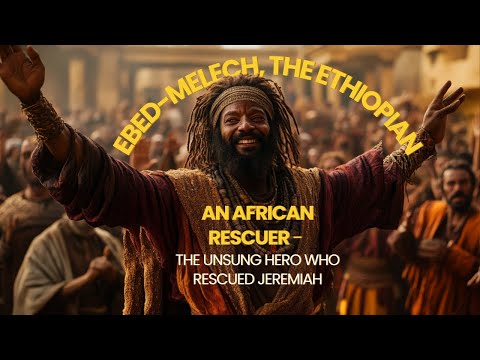
Rescued from the Muddy Depths

  When the Lord’s faithful servants suffer for righteousness, He often sends them direct words of comfort. At times, He also sends special a...