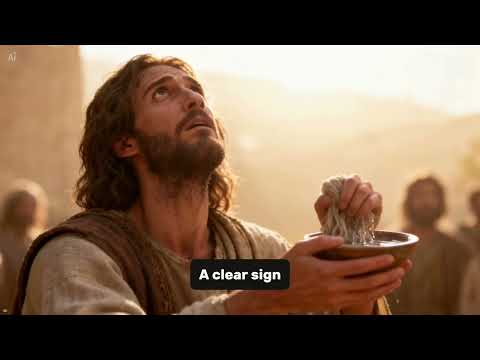
God is even more intentional in caring for His people and providing the freedom we need. The people of Israel had stumbled in their sin and were trapped in exile in Babylon. Yet God promised, “I myself will search for my sheep and look after them” (Ezekiel 34:11). Because Israel’s leaders had allowed them to be “scattered” (v. 12), God said, “I will search for the lost and bring back the strays” (v. 16).
Believers in Jesus see God’s ultimate care in His search-and-rescue mission for us. “The good shepherd lays down his life for the sheep,” Jesus said (John 10:11). When we were lost in our sins and captive to them, He chose to rescue us at great cost. On this day and all days, freedom is precious. Let’s celebrate the Good Shepherd, who has set us free!
These words from Ezekiel 34 form one of Scripture’s most tender and powerful portraits of divine initiative. They reveal a God who refuses to abandon His people even when human leaders fail catastrophically. The chapter opens with a searing judgment on failed shepherds and pivots to breathtaking promises of relentless, personal restoration. Through careful attention to the Hebrew text alongside the English Standard Version, we discover layers of meaning that speak directly to anyone who has ever felt scattered, wounded, lost, or held captive, whether by sin, circumstances, toxic leadership, or the brokenness of this world.
The Devastating Failure of Human Shepherds (Ezekiel 34:1-2)
The word of the Lord came to Ezekiel in exile. The prophet, addressed repeatedly as “Son of man,” receives a commission that begins with confrontation rather than comfort: “Son of man, prophesy against the shepherds of Israel; prophesy, and say to them, even to the shepherds, Thus says the Lord God: Ah, shepherds of Israel who have been feeding yourselves! Should not shepherds feed the sheep?” (Ezekiel 34:1-2).
The Hebrew term rendered “shepherds” carries a rich semantic range. It describes those entrusted with the comprehensive care of a flock, guiding, protecting, feeding, healing, and gathering. In the ancient Near East, kings and leaders were routinely called shepherds of their people. Israel’s civil rulers, priests, and prophets bore this sacred responsibility. Yet the indictment is immediate and stinging. These shepherds have been “feeding yourselves.” The rhetorical question exposes the grotesque inversion of their calling: the very ones charged with nourishing the flock have instead consumed it for personal gain.
Later verses (3-4) expand the charge with painful specificity. The leaders ate the fat, clothed themselves with the wool, and slaughtered the choice animals while the sheep went hungry. They failed to strengthen the weak, heal the sick, bind up the injured, bring back the strayed, or seek the lost. Instead, they ruled “with force and harshness.” The result was inevitable: “So they were scattered, because there was no shepherd, and they became food for all the wild beasts. My sheep were scattered over all the face of the earth, with none to search or seek for them” (vv. 5-6).
The scattering was not merely geographical. It represented the shattering of covenant community, the loss of the land of promise, the silencing of temple worship, and the crushing weight of foreign domination. In Babylon, the exiles lived as captives, stripped of autonomy, dignity, and the visible signs of God’s presence. Their leaders’ self-serving neglect had opened the door to this national and spiritual bondage.
This ancient failure still reverberates. Whenever those in authority, whether pastors, politicians, parents, or employers, use their position to extract rather than to serve, sheep scatter. People drift from churches that wound instead of heal. Individuals internalize messages that they are only valuable for what they produce. Communities fracture under leaders who prioritize personal platforms over the vulnerable. The Hebrew text leaves no room for excusing such betrayal. The question “Should not shepherds feed the sheep?” hangs in the air as a perpetual standard.
Yet the story does not end with judgment. God’s response reveals His heart in stunning contrast.
God’s Personal, Relentless Search-and-Rescue (Ezekiel 34:11-12)
“For thus says the Lord God: Behold, I, I myself will search for my sheep and will seek them out. As a shepherd seeks out his flock when he is among his sheep that have been scattered, so will I seek out my sheep, and I will rescue them from all the places where they have been scattered on a day of clouds and thick darkness” (Ezekiel 34:11-12).
The opening “Behold, I, I myself” carries enormous weight in Hebrew. The repetition of the first-person pronoun underscores divine initiative and personal involvement. God does not dispatch an angel or appoint a better human leader as an intermediary for the primary work of restoration. He declares that He Himself will act. This is no delegated task; it is the Shepherd-King entering the storm.
The verbs chosen are deliberate and intense. The first, often translated “search,” conveys diligent inquiry and purposeful seeking, frequently used when someone seeks God or investigates a matter thoroughly. The second, “seek them out,” adds the sense of attentive inspection and visitation, like a shepherd moving through the flock checking each animal. Together they paint a picture of exhaustive, attentive pursuit. God is not waiting for the sheep to find their way home; He is actively combing the hills.
The analogy sharpens the image. A shepherd does not casually glance across a valley when sheep are missing. He enters the terrain where they have wandered, often dangerous, rocky, and exposed places. Ezekiel adds the detail “on a day of clouds and thick darkness,” evoking chaos, judgment, and disorientation. The exiles felt precisely this: swallowed by the storm of Babylonian conquest, unable to see the path forward. Into that very darkness, God promises to come searching.
The Hebrew verb for “rescue” or “deliver” carries the nuance of snatching away from danger or plucking out of the hand of an enemy. God’s care is not merely emotional sympathy; it is decisive intervention that changes circumstances. He does not merely feel sorry for scattered sheep, He acts to extract them from the places of their scattering.
Comprehensive Restoration
God’s rescue plan unfolds with breathtaking scope: “And I will bring them out from the peoples and gather them from the countries, and will bring them into their own land. And I will feed them on the mountains of Israel, by the ravines, and in all the inhabited places of the country. I will feed them with good pasture, and on the mountain heights of Israel shall be their grazing land. There they shall lie down in good grazing land, and on rich pasture they shall feed on the mountains of Israel. I myself will be the shepherd of my sheep, and I myself will make them lie down, declares the Lord God” (Ezekiel 34:13-15).
The movement is from dispersion to concentration, from foreign lands to “their own land,” from scarcity to abundance. The verb “gather” evokes the re-assembly of what had been torn apart, almost the reversal of the scattering described earlier. Return to the land meant far more than real estate; it signified restored identity, renewed covenant relationship, and the freedom to worship without foreign interference.
Provision follows. “Good pasture” and “rich pasture” stand in deliberate contrast to the neglect the sheep had suffered. The bad shepherds consumed the best for themselves; the true Shepherd ensures the flock receives what is nourishing and plentiful. The repeated promise that they “shall lie down” speaks of security and rest. A sheep lies down only when it feels safe, no predators nearby, no fear of being driven or attacked. God promises not only survival but shalom: peace, provision, and unhurried rest under His direct care.
Again, the emphatic “I myself” appears. God will not merely send rain or raise up a human king (though a Davidic shepherd is promised later in the chapter). He personally assumes the role of Shepherd. This is covenant intimacy at its highest: the Lord of the universe stoops to tend His flock one sheep at a time.
Healing the Broken and Establishing Justice (Ezekiel 34:16)
The most tender and specific verse follows: “I will seek the lost, and I will bring back the strayed, and I will bind up the injured, and I will strengthen the weak, and the fat and the strong I will destroy. I will feed them in justice” (Ezekiel 34:16).
Each phrase deserves slow reflection.
“I will seek the lost” addresses those who have perished or wandered beyond recovery in human eyes. The Hebrew conveys the pursuit of what is active recovery of the apparently hopeless.
“I will bring back the strayed” or “the driven away” speaks to those who did not wander by choice but were thrust out by harsh treatment or circumstance. God reverses forced displacement.
“I will bind up the injured” uses the language of bandaging wounds. The bad shepherds left injuries untended; God applies the healing touch personally.
“I will strengthen the weak” moves beyond survival to empowerment. Those left frail by neglect or oppression receive renewed vitality.
The clause “the fat and the strong I will destroy” has occasioned much discussion. In context, it functions as an act of justice. Those who had grown fat by exploiting the flock or who used their strength to oppress others come under divine judgment. It is not a blanket condemnation of strength, but a targeted removal of the abusive and self-satisfied. God’s care for the vulnerable includes the removal of their oppressors.
Finally, “I will feed them in justice” or “with justice.” The Hebrew term encompasses right judgment, equitable treatment, and righteous order. The flock will no longer be ruled by exploitation or caprice but by the fair and life-giving governance of the Shepherd Himself.
Freedom is the Fruit of Divine Shepherding
What kind of freedom does this restoration produce? For the exiles, it meant release from Babylonian captivity and return to the land where they could serve God without hindrance. Spiritually, it meant freedom from the consequences of their own sin and the oppression of failed leaders. They were liberated to belong, to be fed, to rest, to be healed, and to live under just rule.
This Old Testament picture finds its ultimate fulfillment in Jesus Christ. When Jesus declared, “I am the good shepherd. The good shepherd lays down his life for the sheep” (John 10:11), He stepped into the role Ezekiel foresaw. He is the divine Shepherd who searches, the sacrificial Lamb who rescues, and the risen Lord who gathers His people into one flock. His death and resurrection constitute the decisive rescue operation that snatches us from the domain of darkness and transfers us into the kingdom of the beloved Son (Colossians 1:13).
In Christ, we experience the freedom for which He set us free (Galatians 5:1). We are no longer scattered by sin’s guilt and power. We are no longer held captive to the harsh rule of our own flesh or the accusations of the enemy. We are brought into the “good pasture” of His Word and Spirit, invited to lie down in the security of His finished work, bound up by His healing, strengthened by His grace, and fed with the justice of His righteous reign.
Living Today in the Freedom of His Care
The message of Ezekiel 34 remains urgently contemporary. Many today feel scattered by fractured families, toxic church experiences, political polarization, economic pressure, mental health struggles, or the subtle bondage of performance and approval. Some have been wounded by leaders who fed themselves rather than the flock. Others have wandered through their own rebellion or simply drifted in the “clouds and thick darkness” of a confusing age.
Into every such story God still speaks: “I myself will search for my sheep.” His care is not generic or distant. It is personal, persistent, and comprehensive. He is not waiting for you to clean yourself up or find your own way back. He is actively seeking. The cross proves the length He will go, the ultimate “day of clouds and thick darkness” when the Good Shepherd laid down His life to rescue the lost.
This freedom is precious precisely because it cost so much. It is not the shallow liberty of self-expression or the fragile security of favorable circumstances. It is the deep freedom of belonging to the Shepherd who knows His own by name, who leads them out and brings them in, who gives them abundant life (John 10:10, 27-28).
For those who lead, pastors, parents, mentors, and managers, the chapter issues both a warning and an invitation. We are called to reflect the heart of the true Shepherd: to strengthen the weak, seek the lost, bind up the injured, and rule with justice rather than harshness. When we fail, we must repent quickly and point people to the One who never fails.
For those who feel lost or wounded, the invitation is simple and profound: stop running, stop hiding, stop trying to shepherd yourself. The Shepherd is already searching. He knows every place you have been scattered. He is able to gather, to heal, to strengthen, and to lead you into rest.
A Call to Celebrate the Good Shepherd
On this day and every day, freedom is precious. Let us celebrate the Good Shepherd who has set us free. Let us lift our voices in worship to the One who did not abandon us in our scattering but came searching through the storm. Let us rest in the assurance that He who began this good work in us will bring it to completion. And let us extend His care to others, seeking the lost, strengthening the weak, and pointing every scattered sheep to the only Shepherd who can truly set them free.
The Lord is my shepherd; I shall not want.
He makes me lie down in green pastures.
He leads me beside still waters.
He restores my soul. (Psalm 23:1-3)
May the words of Ezekiel 34 and the finished work of Jesus anchor your heart in this unshakable reality: God is even more intentional in caring for His people and providing the freedom we need. The search is on. The Shepherd has come. And in Him, we are free indeed.