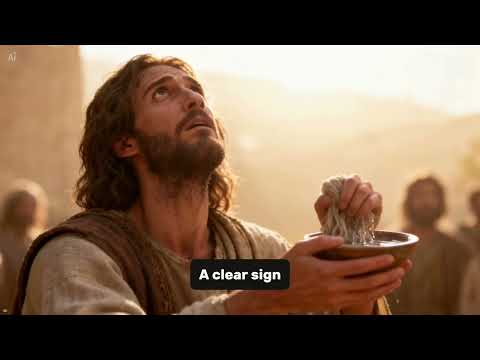
When we are not convinced or clear about what God wants from us or which direction to take, what can we do while still remaining people of genuine faith? The story of Gideon in Judges 6 offers a profound biblical answer. Here we find a man who was weak, hidden, and full of honest questions, yet God met him with both a commission and a confirming sign. The passage does not present Gideon as a model of perfect, untroubled faith. Instead, it shows how a sincere heart can bring its doubts to God, ask for confirmation in matters not explicitly detailed in previous revelation, and still walk in humble dependence. Gideon’s experience gives us permission to seek clarity without surrendering our identity as believers who trust the living God.
The context is one of national crisis. For seven years, the Midianites had oppressed Israel, raiding like locusts and stripping the land bare. Gideon was threshing wheat in a winepress, not the usual open threshing floor, precisely to hide the grain from the invaders. Into that hidden place the Angel of the LORD appeared. What unfolds in verses 14–24 is a divine encounter that moves from commission to objection, from request for a sign to miraculous confirmation, and from holy fear to worshipful peace. Along the way, the Hebrew text invites us to linger over key words and phrases that illuminate both Gideon’s struggle and God’s gracious response.
“Go in this might of yours” Reflects the Strength God Sees in the Weak
The LORD turned to Gideon and said, “Go in this might of yours and save Israel from the hand of the Midianites. Have I not sent you?” (Judges 6:14, ESV).
The Hebrew phrase is לֵךְ בְּכֹחֲךָ זֶה (lekh bəkhoḥăkhā zeh). The word כֹּחַ (kōaḥ) commonly denotes physical strength, vital force, or military capacity. In many Old Testament contexts, it describes the power by which kings or armies prevail (Psalm 33:16). Here, the demonstrative זֶה (“this”) points to something already present in Gideon, though he cannot yet see it. The Angel does not mock Gideon’s weakness; He redirects his attention to a different kind of might, the might that God Himself supplies through calling and presence.
Gideon possessed the might of the humble. Threshing wheat in a winepress was an act of quiet faithfulness under pressure. He was not posturing for greatness; he was simply trying to feed his family while the enemy ravaged the land. God often begins His greatest works with people who are willing to serve faithfully in small, hidden places.
He also possessed the might of caring. When the Angel first greeted him as “mighty man of valor” (Judges 6:12), Gideon’s immediate response revealed his heart: “Please, my lord, if the LORD is with us, why then has all this happened to us?” (v. 13). He cared deeply about the low estate of Israel. Spiritual leadership that God can use often begins with a burden for the people of God rather than a hunger for a personal platform.
Gideon had the might of knowledge. He knew the stories of the Exodus and the great deeds the LORD had done for the fathers. His question was not born of ignorance but of longing: “Where are all his wonderful deeds…?” (v. 13). Biblical knowledge, when joined to present need, becomes fuel for faith rather than dry information.
He carried the might of spiritual hunger. Gideon wanted to see God act again in his generation. That hunger kept him from cynical resignation. Many people know the Bible’s stories yet feel no ache for God to move in their own day. Gideon’s hunger positioned him to receive both a call and a sign.
He demonstrated the might of the teachable. He listened. He did not interrupt the divine messenger with his own agenda. When the LORD spoke, Gideon responded with honest questions rather than defensive arguments. Teachability is a form of strength that God delights to honor.
Finally, Gideon had the might of acknowledged weakness. His later objection makes this plain: “Behold, my clan is the weakest in Manasseh, and I am the least in my father’s house” (v. 15). The Hebrew words are revealing. אַלְפִּי הַדַּל (ʾalpî haddal) describes his family clan as “the poorest” or “the weakest”, דַּל (dal) conveys low status, thin resources, and social insignificance. הַצָּעִיר (haṣṣāʿîr) means “the smallest” or “the youngest,” carrying connotations of least importance in rank or inheritance. Gideon’s self-assessment was factually accurate by human standards. Yet God did not correct the facts; He supplied what was missing: “Surely I will be with you, and you shall strike the Midianites as one man” (v. 16).
The phrase כְּאִישׁ אֶחָד (kəʾîš ʾeḥāḏ), “as one man,” suggests decisive, almost effortless victory, the kind that feels as though a single person accomplished it because God Himself fought. More importantly, the promise אֶהְיֶה עִמָּךְ (“I will be with you”) echoes the very name and assurance God gave Moses at the burning bush (Exodus 3:12, 14). Gideon did not need inflated self-confidence. He needed God-confidence rooted in the Sender’s presence. This is the same assurance the risen Christ gives every believer: “I am with you always, to the end of the age” (Matthew 28:20).
“Show me a sign that it is You who talk with me”: The Legitimate Request for Confirmation
Gideon’s next words are pivotal for our question about seeking signs while remaining people of faith. “If now I have found favor in your sight, then show me a sign that it is you who talk with me” (Judges 6:17).
The Hebrew is carefully respectful: אִם־נָא מָצָאתִי חֵן בְּעֵינֶיךָ וְעָשִׂיתָ לִּי אוֹת (ʾim-nāʾ māṣāʾtî ḥēn bəʿênêkhā waʿăśîtā lî ʾôṯ). The particle נָא (nāʾ) softens the request into a polite plea. חֵן (ḥēn) speaks of unmerited favor or grace. Gideon does not demand; he appeals to grace already shown. Most significantly, the word אוֹת (ʾôṯ) means a sign, token, pledge, or miraculous attestation. In the Old Testament, an אוֹת often serves to confirm a covenant (Genesis 9:12–13, the rainbow), authenticate a messenger (Exodus 4:8–9, Moses’ signs), or mark a divine intervention. Gideon was not asking for a sign to avoid obedience or to test God’s power for entertainment. He was asking for confirmation that the One speaking to him was truly the LORD, because the stakes, leading Israel into battle against a superior enemy, were life-and-death.
Scripture distinguishes between illegitimate and legitimate requests for signs. The Pharisees demanded signs from Jesus to test Him, and He called their generation “evil and adulterous” (Matthew 12:39). Yet Abraham asked, “O Lord GOD, how am I to know that I shall possess it?” (Genesis 15:8), and God graciously gave him a covenant-cutting ceremony. Moses received signs to confirm his calling to Israel (Exodus 4:1–9). Hezekiah received a sign regarding his healing (2 Kings 20:8–11). Gideon’s request falls into this category of humble, faith-seeking confirmation rather than cynical testing.
Gideon’s actions after the request further reveal his heart. He prepared a generous offering: a young goat, unleavened bread from an ephah of flour (roughly 22 liters, a substantial amount), and placed the meat in a basket and the broth in a pot. He brought everything out under the terebinth tree and presented it. The Angel instructed him to lay the meat and bread on a rock and pour out the broth. Then, touching the offering with the tip of His staff, fire rose from the rock and consumed everything. The Hebrew describes וַתַּעַל הָאֵשׁ מִן־הַסֶּלַע וַתֹּאכַל אֶת־הַבָּשָׂר וְאֶת־הַמַּצּוֹת, “fire rose from the rock and consumed the meat and the unleavened bread.” This was no ordinary campfire. It was a theophanic sign of divine acceptance, reminiscent of the fire that fell on acceptable sacrifices elsewhere in Scripture (Leviticus 9:24; 1 Kings 18:38; 1 Chronicles 21:26).
The sign did more than prove the messenger’s identity. It also foreshadowed that the coming deliverance would ultimately be accomplished by God’s power rather than human military might alone. As one commentator observed, “Here was a sign that the Midianites should be destroyed without man’s labour.” While Gideon would later lead an army, the victory would be unmistakably God’s.
Gideon’s Response and the Altar of Worship
When the fire consumed the offering and the Angel of the LORD vanished, Gideon finally perceived who had been speaking with him. “Alas, O Lord GOD! For I have seen the Angel of the LORD face to face” (Judges 6:22). The Hebrew מַלְאַךְ יְהוָה (malʾaḵ YHWH) often denotes a theophanic appearance in which the LORD Himself comes in visible form. Seeing the divine presence “face to face” (פָּנִים אֶל־פָּנִים) triggered the classic Old Testament fear: no one can see God and live (Exodus 33:20). Gideon’s terror was not cowardice; it was the proper response of a sinful human confronted with holy deity.
The LORD’s reply is one of the most tender in Scripture: “Peace be with you; do not fear, you shall not die” (Judges 6:23). The Hebrew שָׁלוֹם לְךָ אַל־תִּירָא לֹא תָמוּת (shālôm ləkhā ʾal-tîrāʾ lōʾ tāmût) grants both peace and life. שָׁלוֹם (shālôm) is far more than the absence of conflict. It conveys wholeness, completeness, harmony with God, and flourishing. The God who had just revealed His holiness now revealed His intention to give peace.
Gideon’s response was to build an altar and name it יְהוָה שָׁלוֹם (YHWH Shalom), “The LORD Is Peace.” This was an act of worship and consecration. He was no longer paralyzed by fear; he was anchored in the character of the God who had met him. The altar stood as a lasting memorial in Ophrah “to this day.” True encounters with God move us from fear through peace into worship, and worship prepares us for the battles that follow. As Charles Spurgeon observed, “When Gideon is fully at peace, what does he begin to do for God?… If God loves you he will use you either for suffering or service; and if he has given you peace you must now prepare for war.”
The Biblical Case for Believers Asking for Signs Today
Does Gideon’s example give modern believers license to seek signs? The answer is a careful yes, under specific conditions that preserve faith rather than undermine it.
First, signs are appropriate when Scripture does not give explicit direction for a particular decision. We do not need a sign that God loves us; the cross forever settled that (Romans 5:8). We do not need a sign forbidding sexual immorality or commanding love for neighbor; the Word is clear. But when we face choices about location, vocation, timing of major steps, or specific ways to fulfill a general calling, seeking confirmatory guidance is not unfaithfulness. It can be an expression of dependence.
Second, the request must be humble and grace-oriented, not demanding or testing. Gideon said, “If now I have found favor…” He was willing to honor the messenger with an offering. Requests born of entitlement or designed to manipulate God cross into presumption.
Third, any sign or confirmation must be tested by Scripture and the character of God. Miraculous phenomena alone are not self-authenticating; deception is possible (2 Thessalonians 2:9–10; Matthew 24:24). Gideon’s sign was validated by its alignment with the earlier word, its gracious character, and its consistency with how God had revealed Himself before.
Fourth, the goal of seeking confirmation should be greater God-confidence, not the removal of all risk or the feeding of a sign-addicted spirituality. Gideon still had to step out. The sign strengthened him for obedience; it did not replace obedience. The same God who said to Gideon, “I will be with you,” says to us in Christ, “My grace is sufficient for you, for my power is made perfect in weakness” (2 Corinthians 12:9).
When we are unclear about direction, we can do several things while remaining people of faith: search the Scriptures for principles that apply, pray with honest questions, seek wise counsel from mature believers, pay attention to circumstances and the inner witness of the Spirit, and, yes, humbly ask God for confirmation in ways that honor Him. We can “go in this might of yours,” the strength that comes from knowing we are sent and accompanied by the living God.
Gideon moved from hiding wheat in a winepress to leading Israel’s deliverance, not because he suddenly became self-confident, but because he encountered the God who gives peace in the middle of holy fear and then sends His people out in His strength. The altar he built still speaks: the LORD is peace. That peace does not cancel the call to battle; it equips us for it.
If you find yourself unsure of the next step, bring your weakness, your questions, and your desire for clarity to the same LORD who met Gideon. Ask reverently. Listen carefully. Expect that He may confirm His word in ways that surprise you. Then rise, go in the might He supplies, and trust that He who sent you will be with you, until every battle is won and every fear is swallowed up in the perfect shalom of His presence.